VBC blog Archives - Page 3 of 4 - Vilniaus verslo kolegija

How to Learn Effectively? Advice from Lecturers

How can you learn to balance your life, to make your knowledge last and become your own, and to avoid a chaotic and debilitating phase with last-minute tests? When December and January are full not only of holidays, but also of all kinds of tests and exams, seemingly any advice is useful. Not just any advice, but practical, tried-and-tested and workable study tips from our College lecturers.

Aušra Gaivenienė, Team academy coach and trainer

  • Schedule time for learning and include it alongside all other activities.
  • Make a plan for each day, or at least each week, and implement it.
  • Look for interesting ways of learning that work for you: maybe it’s a different location, maybe it’s learning with a few friends in a group, maybe it’s a different format (listening or reading).
  • Use the Pomodoro method of learning: 25 minutes of very intensive learning and 5 minutes of rest, 25 minutes of learning and 5 minutes of rest. During the rest time, do what you like, what you feel like doing: lie down quietly, talk to someone else, make some tea, etc. The most important thing is to change activities after active learning.

Assoc. dr. Gitana Neverienė, Director of Vilnius Business College

  • “Repetitio est mater studiorum” (Latin for “repetition is the mother of learning”) is a highly effective way of learning that reveals the essence of the whole learning process and has even been proven by scientific studies of brain activity. Our brains tend to forget a lot of things, which is why it is essential to repeat all the information we receive during our studies. This is the only way to prepare effectively for an exam or other form of reporting.
  • The absorption of information is also enhanced by the emotion attached to it and its association with something (dance, action, object, etc.). This is very individual, so search, try, discover and find out which connections work best for you to assimilate the information.
  • Test different ways of absorbing information, e.g. you remember more when you hear or read information. When you find your preferred method, it will be much easier to remember.
  • Resting before an exam is very important as it gives the brain time to process everything, so don’t sacrifice sleeping hours for other activities.

Julius Balčikonis, lecturer in computer graphics

In each discipline, look for subjects, topics, practical applications, etc. that are of personal interest to you. When you find an angle that engages and interests you, learning will become a powerful motivation, a pleasure rather than a torment.

Violeta Jadzgevičienė, Lecturer, Head of IT Department

  • Put into practice traditional learning techniques that many students have tried and found effective: e.g. underlining important points in notes or texts, writing down key points and reading them later, telling a friend what you have learned, asking a friend to tell you what they have learned themselves.
  • Learn with a friend. It’s motivating, supportive, and much easier to find out the information you’re missing or to go deeper into topics you don’t fully understand.
  • Before going to bed, repeat in your mind the key points you have learnt that day.

Aušra Kandola, Lecturer in Content Development for Media

  • During the lectures, outline and then work on your notes: read, underline important points (use different colours to mark different important information), write short notes in the margins (this can be done on the computer). It is very important to read your notes at least a few times and to repeat them to yourself or a friend without looking at the notes. If the information is complicated or you find it difficult to remember, read your notes more often and repeat what you have read.
  • Before an exam or an important report, think in advance about what you will reward yourself with after you pass the exam and make sure you do it. These can be simple things that you always run out of time for: a lazy day at home, a trip to another city, a long meeting with friends, a hobby day, etc. Let this be your motivation for learning, especially when you get lazy, lose your temper, get overwhelmed by doubts or lack of confidence. Reward yourself not only for significant achievements, but also for smaller ones, especially when you are studying a subject you find more difficult.

Good luck with your studies!

Project-based Learning: More Opportunities to Experience Business Reality

What is project-based learning in the study programmes of Vilnius Business College? It seems simple: you get a task, you do it and you check it off with a calm heart. But is what sounds simple really easy to implement in education? Andrejus Račkovskis, Head of Learning Innovation, and Virgilija Zinkevičiūtė, Associate Professor and Project Based Learning Manager, talk about the development, results and benefits of project-based learning.

Project-based learning is about designing business ideas here and now

Project-based learning is learning from the concretization of an idea and its development using project principles, with a clear goal, deadline, timeline and outcome. The project is carried out by a team of students from different disciplines and is supervised by lecturers. “Each member makes a plan of what they will do and in what time frame. Together they learn how to communicate with the team, share responsibilities and plan. In this way, project-based activities bring students much closer to the reality they will face when they graduate, because this way of learning is based on practice,” explained Mr Račkovskis.

Project-based learning is used by the world’s best business schools and has been consistently applied at our College since 2015, following the adoption of the methodology by Finnish educational leaders. Implementing an idea, attracting business, learning how to work in a team, the opportunity to experience change management in business, applying knowledge, the opportunity to go beyond the boundaries of a single subject, stepping out of the comfort zone – these are the reasons why project-based learning has become an effective way of teaching.

Raczkowski observes, “There is a lot of uncertainty in the implementation of a project: whether you will manage the process, whether you will get along with your team members, whether you will calculate the finances correctly, whether you will be able to divide the work, and, if somebody has not done their job, to take over, because a project is considered to have been implemented when the result is achieved. In this activity – as in business – students experience being dependent on others. It is a rewarding experience.”

How does it work?

According to Associate Professor Dr Virgilija Zinkevičiūtė, at Vilnius Business College, the project activity is combined with the teaching of subjects and lasts for 3 months.

  • Students choose the topic, the problems their project will address, and clearly formulate the idea.
  • A teamwork agreement is signed. It defines the contribution of each member, sets (and then scores) a percentage of the goal each member has set, so that the students are assessing each other.
  • A project where students learn to integrate knowledge and skills from different subjects, work in a team and get practice.
  • Presentation and public defence of the project results. This is a real-life skill, as at work it is often necessary to present and defend the results achieved. For students, it is also a rehearsal for defending their thesis and future projects. The project is marked by teachers from different disciplines.
  • An individual reflection, written by each student after the defence, on their contribution to the project. This helps him/her to understand what went well/not so well, what could have been done better or differently, etc.

Successful projects become functioning businesses

Vilnius Business College has a number of students who have turned project activities into real businesses. A group of Business Management and Marketing students opened a summer café in Palanga, A. Rubinsky prepared a project for his own business – a smart phone repair shop “Can’t stop”, and the owners of the bakery “Crustum” prepared a project for their business. A successful social project “Consolation” (an event for children with oncological diseases) was implemented by IT students together with the then tourism and events students. Students studying business and management under the Team academy method successfully collaborated with the solar energy company Saulės grąža.

Another model of project-based activities is the continuous project, where students carry out the same project in different phases throughout the academic year. Each phase is related to the learning subjects that the project complements. The e-Business study programme is distinguished by the development of project activities in this way. If a student has a business idea, he or she has a fully developed or even functioning project after the studies.

Student projects bring significant benefits to businesses

“The College strengthens project-based learning and aims to have as many outsourced projects as possible, where a business approaches us with a specific need, the students create a solution and are rewarded. In this case, teams compete to see whose solution wins. This way, learning becomes part of the business, the value of the projects increases and the motivation of the students increases, the funding is available, and the students are working under real conditions,” explained Andrej Račkovski.

Vilnius Business College regularly cooperates closely with entrepreneurs, whose projects help them to find solutions, new ideas and even potential employees. There is always a mentor teacher who supervises the students’ work, advises them and guarantees that the project results are of high quality. And for the students, it is an opportunity to act, to be noticed and appreciated outside the college, to get a placement or a job.

Diploma and Career: Do They Need Each Other?

Imagine: you’re 30 years old, you have a job you love, a great personal life and… You start studying. What are the reasons that bring someone who is successful in their field to a student’s chair? Sigita Daščioraitė, a sophomore in Business Management and Marketing who studies with us on weekends, explains why she decided to study, what happened once she started applying the knowledge she gained, and answers who needs a diploma anyway: her or her employer?

Sigita Daščioraitė

Many would say that a diploma is not essential, but I’m staying on the diploma’s side. In my lifetime, I have met people who pursue their careers or develop their businesses without any diploma or university knowledge, but most of them go back to study because they want to become better professionals in their field and to gain valuable knowledge.

That would also include me. A person that has been involved in music, art and dance all my life. However, life has turned upside down and I have grown with the idea that I want to achieve more, to get to know and to learn valuable things that will help me to stand on my feet even stronger and to have more confidence in myself as a professional, as well as a person. I took a completely different path – Business Management and Marketing (https://www.kolegija.lt/studiju-programos/verslo-vadyba-ir-marketingas/). It may not seem like the artistic field in which I know myself entirely, but it just so happens that I am rediscovering myself here. I’m starting to see other sides of myself, and sometimes I can even surprise myself. The artistic spirit is not lost either – the college lectures are full of ways to self-express artistically, even in this study programme.

So the question is, why am I here? Let me be clear – I was young, it wasn’t really on my mind, and besides, how can you choose your career when you are eighteen? It’s crazy hard to decide when you’re not sure what you want to be and who you are. So after my first year I understood that it wasn’t for me, that I wasn’t going to be a music teacher. I want to pursue a career in another field. And it took me 6 years to realize that! The older you get, the more difficult it is to think about studies and a diploma, and the harder it is to combine everything at once.

I owe my daily trek to Vilnius Business College to my best friend, who encouraged me to keep going and fight for my place under the sun. It’s great that the college is a place where I can study on weekends and combine everything with work.  I catch myself already applying some of the knowledge I’ve gained or tips I’ve picked up to help me perform even better at work. It’s a paradox, because before I started studying, I thought I really knew everything about my job! That there is no room for improvement anymore. With the introduction of different principles and new systems, I have fallen in love with my job all over again!

The baggage of life experience makes you see things with different eyes. Not the fearful ones that don’t know what they want, but… with the eyes that are hungry. Hungry for knowledge and for the goal I want to achieve. We often hear today’s naïve attempts to ridicule diplomas as just a piece of paper and nothing more. Yes, essentially it is just a piece of paper, but the most important nuance isn’t a proof that you have one, but a general understanding of the benefits of the lectures, of all the information I get from the lecturers or from my course mates who share their experiences. The most important thing is that I would know my worth even without a diploma. After all, you don’t carry what you learn on your shoulders. And a diploma is like an old, barely visible scar. It’s a reminder, a proof that I’ve had a memorable journey and learnt something.

Right now, I look at the diploma as a tool that should be of interest to you, not so much to your employer. It is to know your worth, to know that you can do it again because learning or refreshing your knowledge is the most wonderful source of development. I firmly believe that a career and a diploma go hand in hand and need each other if you want to move up the career ladder, be a professional in your field or just become even a more confident person. I know that I will experience both black and white, but I will go to have a scar in my life’s history that will remind me of an experience that has truly given me much.

First-year Student K. G. Rakel: “These Studies Are Like a Gift From Heaven!”

First-year Student K. G. Rakel: “These Studies Are Like a Gift From Heaven!”

As September is bursting with new students, we are curious to get to know them and to learn about the generation that is joining our large college community. One of the newcomer is Kamilė Gabrielė Rakel, whose journey to Vilnius Business College was marked by some fateful choices. What is the start of her studies and what else does Kamilė Gabrielė do at our college besides studying?

To College – Through Trials and Tribulations

Kamilė Gabrielė Rakel’s path to studying at Vilnius Business College confirms that what is meant to happen will happen. After successfully enrolling in the TEAM ACADEMY method of studying Business Management and Marketing back in 2021, she had to… collect her documents. After a close relative, her grandmother, suddenly fell ill, Kamilė Gabriele had a difficult decision to make. “My family is small: it’s me, my mother and my grandmother, so it goes without saying that I would stay to take care of her. This period has matured and brought me up. The anxiety I felt and the increased responsibility have given me a life experience that has changed the way I look at many things”, she recalls.

Studies by Team Academy: More Practice and Opportunities

Exactly one year later, Kamilė Gabrielė is now a real TEAM ACADEMY student.  Being active and enterprising, she said she didn’t want to study only dry theory during her studies, so when she heard about the Finnish TEAM ACADEMY method, she was immediately fascinated by it. “I liked the fact that practice plays an important role here – it’s where you get your knowledge. Along with my diploma, I will get three years of experience. This means more opportunities,” comments K.G. Rakel.

While experiencing slight nervousness while waiting for September, the first-year student now says that the start of her studies brings her a lot of good emotions. “These studies are like a gift from heaven! I am very happy about the start because so far everything is going as I expected”, says Kamilė Gabrielė. Interesting lecturers, a balanced study/work schedule, lectures and group meetings, which, according to the student, can be described as a workplace that prepares young people for excellence. And this is not her first experience. Kamilė Gabrielė has been working since she was 15, and has had several different jobs, from waitressing to assisting in an event organisation company. She is looking forward to working on social projects with TEAM ACADEMY students in college, and for her second year she has her sights set on a permanent job in a company with an interesting activity, such as an advertising agency. Perhaps she will set up such an agency together with other TEAM ACADEMY team members?

New Experiences Include Coordinating the Student Representation Office

Student Representation at Vilnius Business College is another new activity for Kamilė Gabrielė, where the energetic first-year student has been appointed as the coordinator. Having already held her first meeting with students interested in participating in the Student Representative Office, she is very excited about her new team. “We have met active people who are full of ideas, sincerity and are eager to act. We communicate a lot, share ideas and create plans. Our first event will take place on 24 October – a meeting and a motivational talk with a famous person. Upcoming plans include getting to know international students, a welcoming event for freshmen, integrated lectures with sophomores, promotion of physical activity and a Christmas party for students.” – says the coordinator.

The Student Representation particularly welcomes second and third year students, their experience and creativity. K.G. Rakel is convinced that participation in such activities is meaningful and useful. “Being involved in the Student Representative Office together with the students is all about the community and the friendship that binds us all. We spend time together, we create, we share. It’s good for everyone. Working together as a team helps to acquire different skills, such as problem-solving, which will definitely be useful in the future,” motivated the new Student Coordinator of Vilnius Business College.

If you would like to join the Vilnius Business College Student Representative Office, please click here.

My first year studying by the TEAM ACADEMY method

What are the only TEAM ACADEMY studies available in Lithuania? What do students, who study business management and marketing in a completely different way than usual, say about it? Saulė Malinauskaitė, who graduated from her first year in June, shares her story of how she came to our college from medical sciences in Sweden and what she found there.

Saulė Malinauskaitė

It all started in Sweden. I’ve lived there with my family since I was a little girl, so naturally I wanted to study there. When I finished high school, my family had to move back to Lithuania. I decided to stay alone in Sweden because I had already enrolled to study medicine. One week of studies was enough to make me think about returning to Lithuania. My dad decided to help and started looking for the right studies for me. He found a programme that met all my needs and requirements. It was business management and marketing using the TEAM ACADEMY method.

I was immediately attracted to this study programme because of its uniqueness, in particular because:

  • learning through an internship with a team to set up your own business in the first year of your studies;
  • applying the knowledge gained in lectures to real projects;
  • individual personality traits are highlighted and used in a targeted way to achieve a result;
  • there is an opportunity to earn money during your studies;
  • few lectures and lots of practice.

All of the above items are uploaded to the Vilnius Business College website. I only had to read them to send my application immediately. To be honest, the TEAM ACADEMY method of studying is so beautifully described that I didn’t believe it could become a reality.

When I joined, I was in for a second surprise: the beautiful text on the website was true. The first six months were quite challenging. Working in a team is fun and full of different experiences, but not always easy. I had to learn how to work in a team and adapt to the Lithuanian education system, which is radically different from Sweden. Setting up a company together with other team members is not so easy. We often had to compromise on various issues and problems, but with the help of teachers and coaches we managed to overcome all obstacles. We had a lot of practice, which encourages us to develop our skills, to take more interest and to go deeper into the business field.

I never thought I would study business management and marketing. My vision for the future was in a completely different field and country. After the first year of my studies, I know that I would not change a single decision that has led me to this TEAM ACADEMY study.

4 Reasons to Study Digital Business

I will open an e-shop and start my own business that way; lots of people do it, everybody does it well, so I’m sure I will too. This is the thought that many people start their business journey in the boundless digital space and… quietly end it. Statistics show that 80-90% of those who start an e-business fail. To avoid becoming one of them, here are 4 reasons why you should study e-business if you want your online idea to succeed.

You will create an e-business with an understanding of business processes

Experienced entrepreneurs know that understanding business processes is one of the cornerstones of success, which is why the e-Business study programme focuses on it. “How business works and in what environment, how e-business differs from traditional business, what are the internal and external processes – students will learn about these things. There are a lot of hidden things in building a business in the online space that you won’t learn from a friend or websites. There are different technologies to learn about, but other things are equally important: what is a business and an entrepreneur, what skills do they need, what are the human resource management aspects. Finally, core subjects such as e-commerce, e-marketing, etc. are included, which provide a solid foundation,” said Liuda Maciukevičienė, the head of the working group that developed the e-Business study programme.

Experienced entrepreneurs know that understanding business processes is one of the cornerstones of success, which is why the e-Business study programme focuses on it. “How business works and in what environment, how e-business differs from traditional business, what are the internal and external processes – students will learn about these things. There are a lot of hidden things in building a business in the online space that you won’t learn from a friend or websites. There are different technologies to learn about, but other things are equally important: what is a business and an entrepreneur, what skills do they need, what are the human resource management aspects. Finally, core subjects such as e-commerce, e-marketing, etc. are included, which provide a solid foundation,” said Liuda Maciukevičienė, the head of the working group that developed the e-Business study programme.

A good understanding of business processes, which few new e-business start-ups can boast, will help to find solutions to challenges such as why only 2.86% of a visit to an e-shop is converted into a purchase (invespcro.com), or why the personalization of e-businesses is so important, as it is the reason why businesses will have lost as much as $756 billion in 2021 (optinmonster.com).

You will help digitalize traditional business

According to shopify.com, one of the most popular e-commerce platforms, retail revenue from physical stores is almost equal to online shopping. Obviously, with these statistics, it is very important to have an e-shop, but did you know that if a customer’s experience of shopping online via their mobile phone is negative, as many as 62% of them will never visit you again (google.com)? That 32% of shoppers have changed their minds about their purchases in a physical store after checking product information on the company’s website (invespcro.com)? We are not even talking about something as basic as website speed, where 32% of visitors leave a website immediately if it takes too long to load (google.com).

When starting to delve into web technologies, there are many nuances that entrepreneurs usually learn about by hiring experienced professionals (which is an additional cost), through a marathon of testing and error, or… never finding an answer. An e-business degree programme devotes enough time to technology literacy so that the professional can then build an e-business on their own by applying technology or help a traditional business to digitalize their business. “The need for such specialists is very relevant today,” said L. Maciukevičienė.

A promising and highly demanded profession

The first true consumers of the digital era, eager to work for themselves, extremely tech-savvy, visual lovers who care about the mark they leave on the world, and natural multitaskers – the characteristics of Generation Z really do apply to e-business itself.

“Our skills have moved online: we buy food, clothes and courses online. From abroad, too. Our needs, our wants, our behaviour is changing. The events of recent years have made it clear that if a business wants to survive, it has to be prepared. Young people, who are diving into cyberspace and spending a lot of time there, are accelerating these processes.

It is clear that if a business is not able to go online to some extent, it is doomed to fail,” says the head of the working group that developed the e-Business study programme.

This study programme gives you the opportunity to set up and run your own e-business or become a freelancer working anywhere in the world.

These insights are backed up by statistics. The convenience of being able to buy at any time of the day is the number one reason why people buy online. 58% of internet users buy something every week. By 2040, it is predicted that around 95% of all purchases will take place online. It is clear that the need for experienced, professional professionals in this field is growing at a tremendous rate, with demand outstripping supply.

During your studies, you will implement your e-business project

For many people, studying at university means learning the theory that they will have to put into practice when they graduate. As a practical-oriented higher education institution, Vilnius Business College gives its students the opportunity to start implementing their own project during their studies and to develop it consistently over the course of three academic years. An idea that you have in your head or that arises during your studies will become more and more concrete as you turn it into a learning tool.

“By implementing a continuous project, you will apply knowledge from many areas: project management, consumer experience research, consumer behaviour, communication, marketing research, sales, application of various programmes,” explained L. Maciukevičienė. You will always have the support of lecturers – experts in their field and experienced practitioners – by your side, so you will avoid time-consuming and financially costly mistakes in business, loss of motivation, and lack of the necessary contacts.

According to Liuda Maciukevičienė, “Our students will learn about ways to shorten the path from idea to realisation, and develop their creativity. They will use modern tools such as design and visual thinking”.

E-business is the newest study programme of Vilnius Business College, whose content and teachers have been highly appreciated by the accreditation commission. Study and make your dreams come true with the tools of the digital world!


Internship: Only “on Paper” or a Career Jumpstart?

“I want my studies to prepare me for life” – that’s what we often hear from students looking for the right programme and those already at college. At college, where practical knowledge is given special and constant attention, internships in companies are one of the ways to do this and to try out a future profession. We interviewed one of the college’s internship supervisors, Julia Jančak, a lecturer of translation technology, to find out how it works, what students learn and whether an internship can be the first step in a career.

Internship in a company – a chance to test your future career

Julija Jančak manages the internship of English for International Communication students. It starts at the end of their second year and continues throughout the summer. According to her, the internship in a company is valuable in many ways. The students test themselves in their future careers, apply the knowledge they have acquired in lectures, see how they work and perform their tasks, expand their circle of acquaintances, acquire better communication, teamwork and international skills, information-seeking skills and similar skills.

“I am happy to say that the students at Vilnius Business College are great at this. For them, an internship is not just another tick on the to-do list. Our students are motivated and, as they say themselves, they apply everything they have learnt so far. They experience what a working day is like in the company, how meetings are held, the processes within the company, who is responsible for what, how communication within the company and with partners and clients takes place,” says the internship supervisor.

In our experience, students that are responsible, creative and hard-working receive job offers from company managers before they have even finished their studies, so later they have to learn how to combine their studies at college with work.

Supervisor helps to review your results

Students start looking for a place to do their internship at the beginning of their second year. Most of them find the company themselves, others choose from the offers on the college’s website, and some use the recommendations of their supervisor, who usually has a wide range of contacts.

The role of the internship supervisor doesn’t end there. He or she acts as an intermediary between the company and the student and accompanies the student throughout the internship. “During the first consultation, students are given an overview of how things work, where to look for internships, how to communicate with company managers and so on. Once a company is found, a tripartite agreement is signed between the student, the college and the company. Then the individual work begins. The student is not left alone during this part of the process either. If the students don’t know what to do or if misunderstandings happen, the internship supervisor is the first person you turn to for help and advice,” said Jančak.

At the end of the internship, the student submits an internship report with a folder of the work done. On the appointed date, the students of the course get together and give presentations to each other, using slides they have prepared. They talk about the practical experience, challenges, problem-solving techniques, etc. In lecturer’s opinion, such presentations are immensely useful. “Students develop their analytical skills, learn how to select and present information in a structured way, strengthen their presentation and public speaking skills, and, as they have to do all this in English (as required by their degree programme – English for International Communication), they further consolidate their knowledge of the English language”.

Flexible work-life balance

Students at Vilnius Business College undertake two to three internships throughout their studies. The internship under Jančak’s supervision covers 310 hours, so there is plenty of time for real experience. According to Jančak, students must work for about 5 hours a day, so the internship does not consume all their time – it is flexibly combined with personal life and work, as many students at Vilnius Business College have jobs. “It all depends on the agreement with the head of the company. The internship schedule is flexible. You can choose your own work rhythm, do tasks from home and then contact a mentor at the company, etc. Some people do their internships in companies where they are already working. Of course, only if it is possible to coordinate all activities and tasks,” the lecturer emphasises.

Trainee – an opportunity to rear workforce

In Lithuania, companies are usually keen to take on trainees because it gives the opportunity to find and grow a future employee, spread out the workload, etc. This is especially important today, when reliable, hard-working and responsible employees are in short supply, so Vilnius Business College invites company representatives looking for employees in a particular field to contact the college administration.

“The feedback about the students of Vilnius Business College is really excellent. I can see this from the reports that company representatives fill in at the end of the internship. They praise our students for their ability to work independently and in a team, communication skills, quick reactions and good knowledge. Every time I read this, I feel happy and proud,” says internship supervisor Julija Jančak.

“Erasmus+” Studies – a World Opening Learning Opportunity

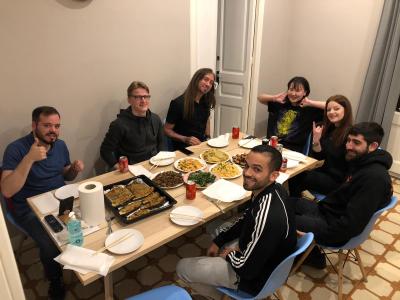
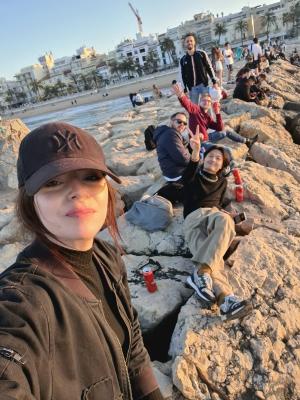
Did you know that every student at Vilnius Business College has the opportunity to study abroad for six months under the “Erasmus+” exchange programme? You can talk a lot about the requirements or the documents you have to fill in, but what could be better than a true story? Armandas Pranaitis, a Business Management and Marketing student, shares his experience of studying in Barcelona.

If a student asked me if it’s worth it to study abroad under “Erasmus+”, I’d grab them by the scruff of the neck and say it is. I know that when they are in another country, they won’t regret their decision for a second. This programme gives students the opportunity to broaden their world view, to communicate with people from other countries, to learn to be independent, to take responsibility for themselves. When you see the wider world, everything is different”, Armandas Pranaitis said bluntly.

He went to Barcelona in the spring of 2021, when the world was still in a state of quarantine and pandemic. The challenges experienced during this period and the positive feedback from friends who had gone on this exchange programme were the reasons for his decision. “At first I wanted to go with my friends, but then I asked myself what would happen if I went alone? The thought caught me and never let go,” the student said of his inner motivation.

What do you need if you want to go abroad to study?

Preparing to go to another country to study for six months has two stages, according to A.Pranaitis: filling in the paperwork and gathering information. The college administration helped him fill in the paperwork and he advises them to contact them if they have any questions or uncertainties. After completing the application, he spent a lot of time looking for information about life in Spain so that he knew what to prepare for and what to expect. As a result, A. Pranaitis says he did not experience any unpleasant surprises when he went to the country. From the very first days in Barcelona, life in the country taught the student lessons of independence, but they were not as difficult as they might have seemed when he was still in Lithuania.

Getting used to a new place, getting to know your neighbourhood, attending your first lectures and making friends – these simple things in Lithuania have become a new experience here. “It took me a week to settle into Spanish life and set up my own home. When I started going to lectures, I quickly found it very easy to make friends and get help from other students. Students are the first to write to me and ask me how I am doing. They helped me to find out what tasks I had to do, if there was anything I might have misunderstood or missed. In this way, I developed my knowledge of both English and Spanish. These were the languages I studied in”, said the student, whose chosen field of study remained the same – business management and marketing

What does a six-month Erasmus+ study programme actually provide?

When asked what he gained from his six months of studies in Barcelona, Armandas Pranaitis emphasised several things:

  • Developing self-reliance and responsibility

“I realised that I have everything and can do everything myself. I learned to change my environment completely and adapt quickly.”

  • Significant improvement in English language skills

“I thought I spoke pretty good English until I talked to people with a strong, specific English accent. Understanding someone who speaks like that is a different matter. Because the university I went to, the dormitory I lived in, had people from all over the world, I spoke English every day. There was a fluency, I didn’t get stuck if I didn’t know a word, and I got a better sense of the language.”

  • Sensing cultural differences and developing tolerance

“Both Spaniards and foreigners living in Spain are very open and easy people to talk to. Unlike in Lithuania, they are quick to open up and tell their own or their family’s story. To feel that people are always willing to talk and to be around was an amazing experience. At the same time, it was a great way to broaden the boundaries of tolerance: don’t judge others, don’t judge, don’t form prejudices.”

  • The ability to relax more

“In Spain, I got a full sense of what relaxation really is, how it affects a person and how important it is. Not to be pressured by others and not to put too much pressure on yourself because of your career, the desire to earn money, the constant rush, to learn to leave your worries behind for a while and to just live – that’s what I learned during my studies in Spain.”

  • Courage to take action and develop tolerance

“This trip has taught me to be more courageous to just take and do. I couldn’t have hoped for better from my studies in Barcelona. It was like an adventure, an venture. I’m so glad I experienced it.”


“Erasmus+” gave me a trip of a lifetime

Armandas Pranaitis encourages other students to be more determined and take the opportunity to study in another country. He thinks it would be especially useful for students who started their studies right after school without a gap year. “Studying with Erasmus+ will be a journey you will never forget for the rest of your life and will broaden your horizons immensely. The paradox is that you only realise how important it is when it all happens.”

Comment by Jurgita Mickevičiūtė, International Students and “Erasmus+” Coordinator

Every student at Vilnius Business College has the opportunity to study under the “Erasmus+” programme. The selection competition for the study programme takes place 2 times a year: in October (for spring departures) and in March (for autumn departures of the following academic year). You can study at universities with which our College cooperates. The selection criteria are very simple and achievable for most students: at least a 7 grade point average, a good command of English, and being active in academic and college activities. Students in any year can apply, except for students in the first semester of their first year, who do not have any grade point average yet.

Another way to gain experience abroad is through a traineeship. Internships abroad are popular among our students, and they look for different countries. The procedure is simple: fill in the paperwork and find a company that will take you on for the period of time you want.

Any questions about studying under “Erasmus+” or doing a traineeship abroad? Contact Marius Zalieckas marius.zalieckas@kolegija.lt

Vilnius Business College alumna D. Vilkevičiūtė: looking into oneself gives strength

Is it enough to have a good knowledge base to successfully complete your studies and start working in the field you want? We asked this Dovilė Vilkevičiūtė, an alumna of Vilnius Business College. In a sincere and insightful conversation, Dovilė shared her discoveries that helped her during her studies and accompany her through her professional life, which is full of changes. What has she discovered and what advice does she have for those who are already studying at our college and those who are still looking for their field of study?

Dovilė Vilkevičiūtė is a 26-year-old alumna of Vilnius Business College, who studied tourism and events planning, worked in hospitality field and with Erasmus+ projects, and later in communications department at Vilnius Business College. At the college, she also ran a creative, self-development workshop “How to Create Your Own Reality”, which led to a new change – studying psychology at Reading University.

One of her biggest discoveries was that studying is as much about self-knowledge and lifelong learning as it is about studying your desired field. Dare, act, take responsibility, surround yourself with inspiring people – these are just some of Dovilė’s tips for young people who want to find their own path and fulfil their dreams. If the opportunities offered by education are not in question, self-knowledge still lacks more attention and importance.

So, what advice does a Vilnius Business College alumna have for current and future students of our college?

Step out of your comfort zone

New studies or a new job, a new city or a new country – whatever the changes in your life, it’s better to embrace them with courage and an open heart than to avoid them, and to suffer later or to feel sorry for yourself. “Only change brings constant renewal, a chance to know oneself and test personal boundaries, it gives space to grow. I have experienced this both as a student and in the later stages of my life. Sometimes, when things get tough, I remember the inspirational lyrics of the famous band Coldplay: ‘Under this pressure, under this weight we are diamonds taking shape'”, says Vilkevičiūtė.

Act now

We are often driven to study by our dreams and our goals to achieve something. That’s great, however dreams alone are not enough. The key difference is to start acting now, in this moment. “Tomorrow may not come, you have to dare to take action now, so it’s important to just go, do, experiment. There is no need to worry. Life will definitely take care of you and me,” says Dovilė.

Responsibility for my life is in my own hands

“During my studies, I strongly believed in the illusion of an easy life. It seemed that no matter what I did, everything would be easy. I belong to a generation that, as the neuroscientist Dr U. Neniškytė aptly described, wants to get everything at once,” Dovilė recalls.

The teachers would tell her that how much she took from your studies was her responsibility. That’s when the realisation came that freedom and responsibility go hand in hand. “I am responsible for myself. The college gave me the tools – the lectures, the friendships, the seminars – but I have to put it all together. And it doesn’t come all at once. I have to put in the effort, act and stay patient,” her fateful realisation shared an alumna of Vilnius Business College.

Surrounding yourself with supportive people

If you don’t fit in with the people around you, if you are interested in different things, or if your relatives don’t support you, Dovilė advises to look for like-minded people at all costs, because it gives you energy. “You will definitely find people who think like you. A social circle is very stimulating. You will see that you are not alone with your hobbies, attitudes and lifestyle,” advises the Vilnius Business College alumna.

Vilkevičiūtė recalls that she found a lot of support and guidance among the college’s lecturers and administrative staff, both during her studies and later when she worked in the college’s communication department. She remembers: “I was very impressed by the personalities of the lecturers, their self-confidence, even their hobbies. Later, I experienced the wise leadership of Andrejus Račkovskis, the head of the Training Innovation and Business Development Department.

He would give me articles to read, listen to me, encourage me. At college I always got support for my ideas. This is how the self-development workshop “How to Create Your Own Reality”, which I created and delivered to students, came about and was enjoyed by the students at the college.”

The role of the student nurtures

Learning continues for a lifetime – you will often hear this from our college lecturers. Dovilė says that this changed her outlook to change in life. “We can say that it is uncomfortable, difficult, painful, etc., but in reality, it is an experience that grows, enriches and matures us. Without it, we would not be who we are today. It’s just important to stay through these moments”.

If it’s difficult, ask for help

Dovilė recalls that she has experienced different phases in her life, some of which were very challenging. She describes her exceptional personality traits as always looking for solutions and not being afraid to ask for help. She advises others to do the same: “In my search for a way forward, I became interested in psychology, which has become one of the ways for me to know myself and to free myself from my inner inhibitions.

Vilnius Business College has an open space “A.K.I.S”: I come, I talk, I hear, I solve, where every student can come and get psychological help for any question they might have. Study coordinators, heads of departments and lecturers are also available to advise, listen and help with various concerns.

How Studies at Vilnius Business College Help to Develop my Personal Qualities

“I am studying in order to gain knowledge and acquire a profession,” – most students answer when asked why are they entering college. What else do students get besides education, new friends and independent life lessons? How does learning, a process that requires willpower, motivation and the ability to concentrate affect every personality? Darius Pečiul, a sophomore in Interactive Media and Technology, shares his insights on how studying at our college has helped him – an introvert – improve his communication skills and open up his other qualities.

Studies are one of the most important decisions in our lives because they reflect one’s personality and lay the foundations for the future profession. Interactive Media and Technologies – that’s the study program that I decided to study at Vilnius Business College and I can confidently say that from the first few lectures I already understood that my choice was right. What I saw is that this college develops professionals who know their field well and allows to reveal every student’s personal qualities.

Here are some of the qualities that I, as a sophomore, have been able to recognize and now am constantly developing.

Critical thinking

This is one of the most important skills that a person can acquire. Critical thinking teaches attention to detail, encourages creativity, logical thinking and practicality. This is what I develop most through programming lectures. When I combine critical thinking with the knowledge I gain during lectures on various elements of design, my creativity expands alongside. I use critical thinking while communicating with people when I am trying to figure out the reasons for their actions.

Problem solving

This is an extremely important trait that will help me a lot in the future. Problems in life are inevitable, so I think that it is important not to get lost, not to panic but to look at the situation calmly and after analyzing the problem to create a problem-solving plan. I remember well one of the first exams in college when after leaving everything right until the last week I experienced a lot of stress and couldn’t wrap my head around how to get out of the situation. I finally turned on the nerd mode and learned everything I had to. Now, if some problem seems big, I break it up into smaller points and get going. Then the problem no longer seems enormous and doesn’t cause me unnecessary stress.

Flexibility

I started studying during an extraordinary period – the well-known COVID-19 pandemic.

The lectures have moved online. Although this made it quite difficult for me to find the motivation and the determination to do anything, it also allowed me to look at learning from a different angle. I have learnt to adapt with limited resources, to make the most out of the situation and to do the tasks assigned as best I can.

Communication skills

I have perfected this skill the most. I came to college as quite as a mouse and I often got ridiculed by my peers while self-help books seemed nonsensical. I remember the words of my psychology teacher that stuck to me the most – “the most important person to you should be yourself”. These words together with the desire to prove the mockers wrong helped me open up and to get out of my comfort zone. I have started communicating more and expressing my opinion out loud, I became more confident and I even took up reading psychology books. All this not only eased work with others but it also opened the door to new acquaintances and new offers. I don’t think communication skills come with time. This is a quality that needs to be developed. A lot of attention is paid to this in college, so I have no doubt that I will learn to communicate absolutely perfectly here.

Motivation

While studying in college I realized that motivation is not just a momentary thing. This, like any other quality, can be developed. I strengthen my motivation by every time reminding myself the answer to the question of why am I studying. I know I will be much more successful in realizing my dreams if I try. So every day I try to learn something new, to study hard and I’m making new connections as well as new friends. There is excitement in my motivation constantly growing and on days when everything seems hopeless and pointless, it is much easier to get back on track by reminding myself the answers to the questions of why do I do it and why do I need it.

I am very grateful to the college for an exciting study program and for the opportunity to develop the personal qualities that are already contributing to my path to success!

Contacts

Company information

Vilnius Business College, Company code 191807983